
How to Properly Reconstitute and Store Peptides 101
Reconstitution is one of the most straightforward processes in peptide research, but it’s also one of the most commonly done incorrectly. Errors at this stage — wrong solvent volume, incorrect technique, improper storage after mixing — can compromise a compound before it ever reaches an experimental context. For researchers at any level of experience, getting the basics right here protects both the integrity of the compound and the validity of any work that follows.
This guide covers what reconstitution is, what you need before you start, how to do it correctly step by step, and how to store your working solution once it’s prepared.
What Reconstitution Actually Means
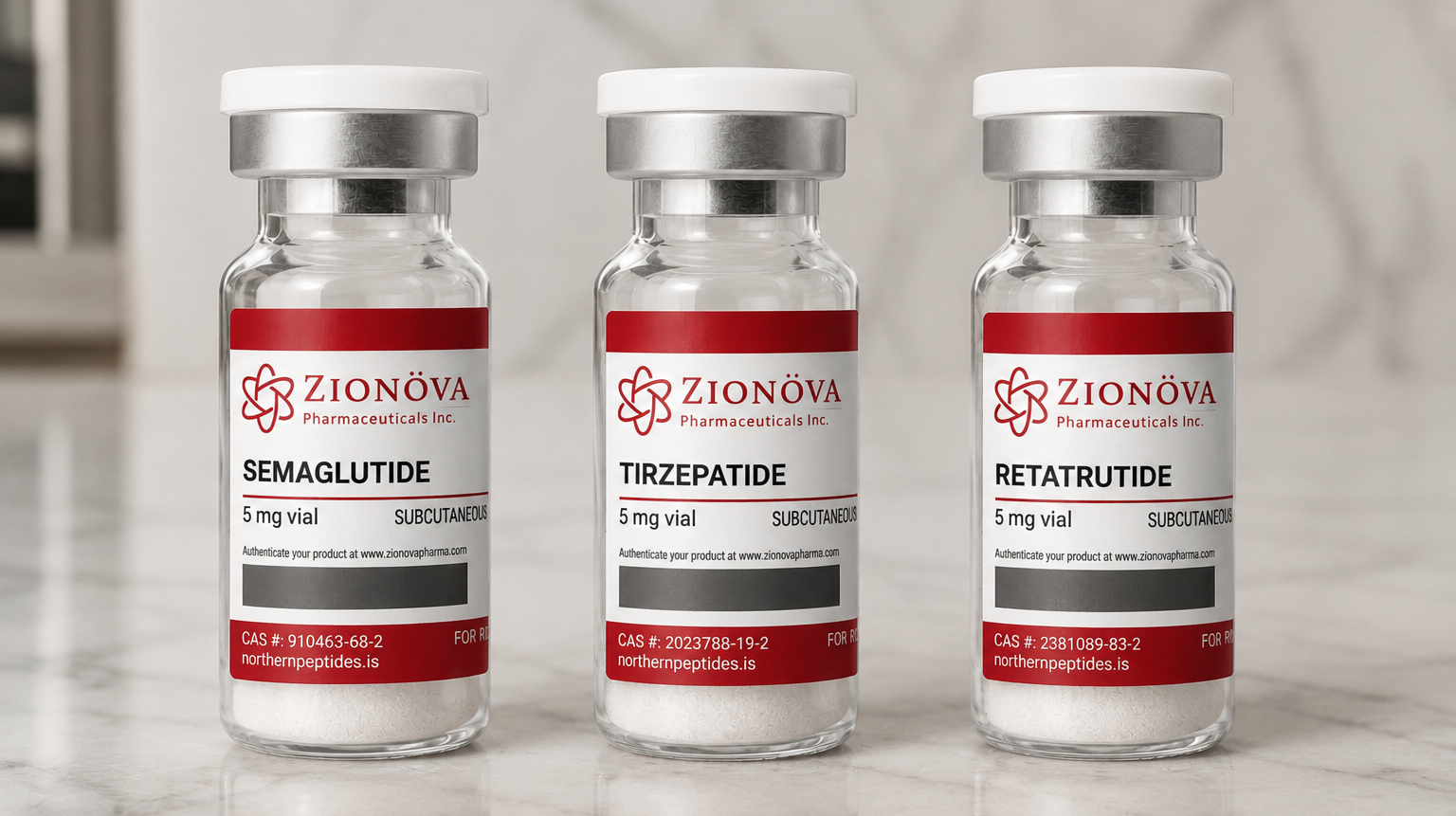
Most research peptides are supplied in lyophilised form — a freeze-dried powder produced by removing water from a liquid peptide solution under vacuum. Lyophilisation dramatically extends shelf life and makes peptides stable for storage and shipping at temperatures that would degrade a liquid product. Reconstitution is simply the process of reintroducing a controlled volume of liquid to that powder to create a working solution at a known concentration.
The concentration of your working solution matters because it determines how you calculate and measure volumes for research use. Getting that calculation right from the start prevents compounding errors downstream.
What You Need Before You Start
Before beginning reconstitution, make sure you have the following:
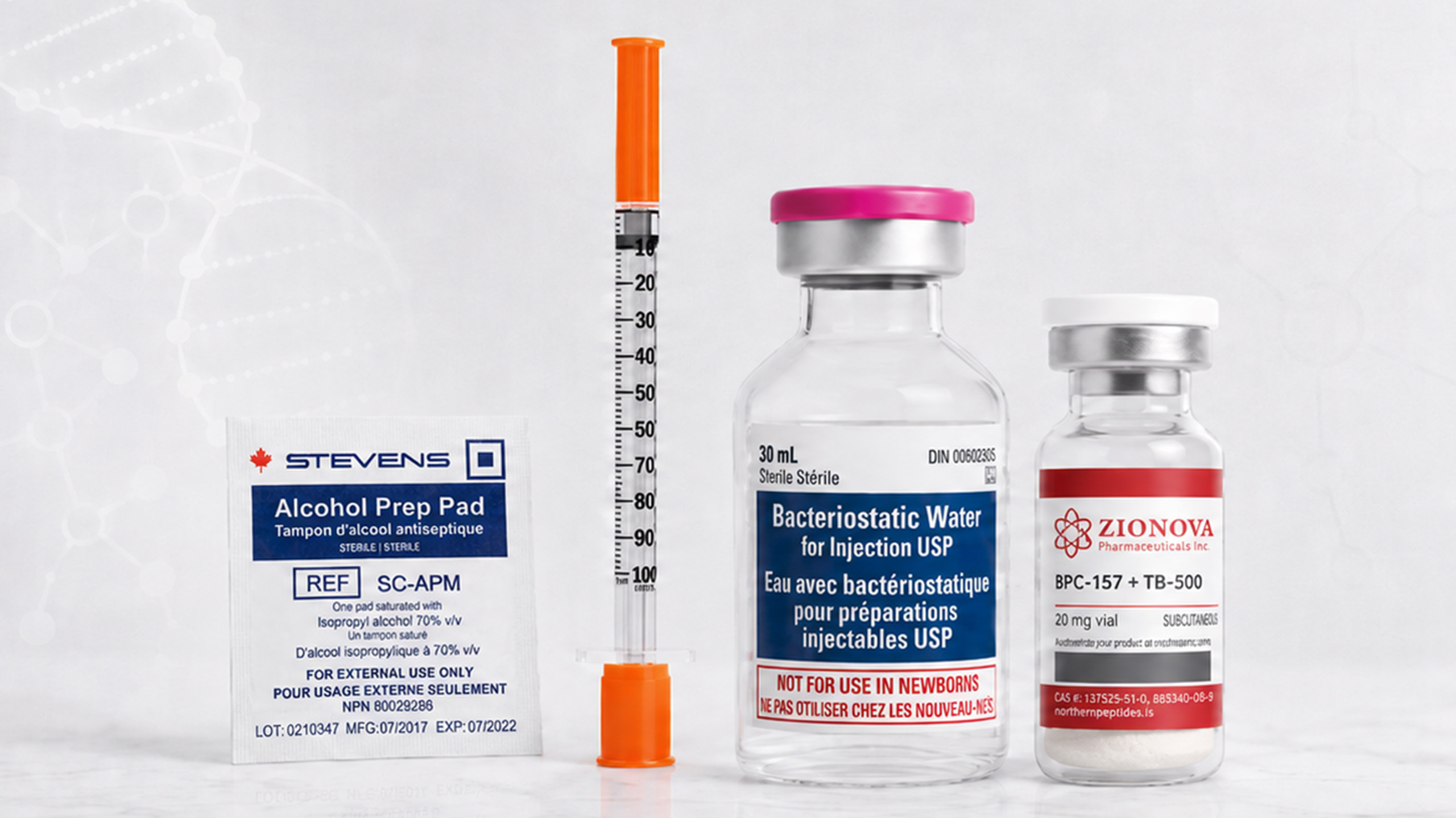
- The peptide vial containing your lyophilised powder
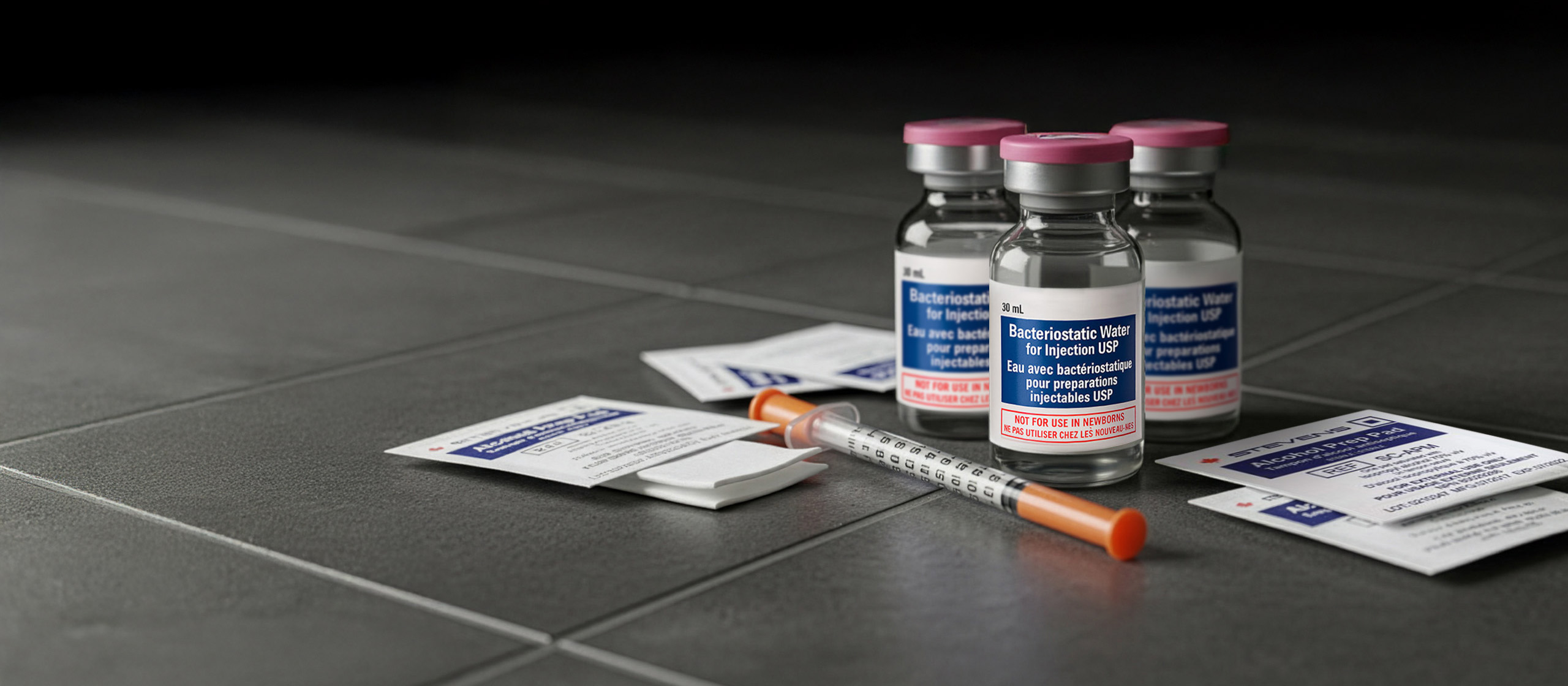
- Bacteriostatic water as your reconstitution solvent — Northern Peptides carries Pfizer bacteriostatic water specifically for this purpose
- Insulin syringes for accurate volume measurement — available in 30g x 5/16″ 1ml and 28g x 1/2″ 1ml formats
- Alcohol prep pads for sterilising septums — Stevens 70% isopropyl prep pads are available individually wrapped for single-use sterility
- The Peptide Mixing Calculator to determine exactly how much bacteriostatic water to add for your target concentration
A quick note on solvent choice: bacteriostatic water is the standard reconstitution solvent for research peptides because it contains 0.9% benzyl alcohol, which inhibits microbial growth and extends the usable life of a reconstituted solution. Sterile water for injection can be used in some contexts but does not offer the same preservation properties, meaning reconstituted solutions will degrade more rapidly. Acetic acid solution is used for specific peptides that don’t dissolve readily in bacteriostatic water, but this is compound-specific and should be confirmed before proceeding.
Calculating Your Target Concentration
Before drawing any solvent, use the Peptide Mixing Calculator to establish how much bacteriostatic water to add. The calculation is based on the amount of peptide in your vial and the concentration you want in your working solution.
As a simple example: a 10mg vial reconstituted with 2ml of bacteriostatic water produces a concentration of 5mg/ml, or 5,000mcg/ml. Reconstituted with 1ml, the same vial produces 10mg/ml. The volume you choose affects how you measure subsequent research quantities, so settling on a consistent approach and recording it clearly is good research practice from the outset.
The Reconstitution Process, Step by Step
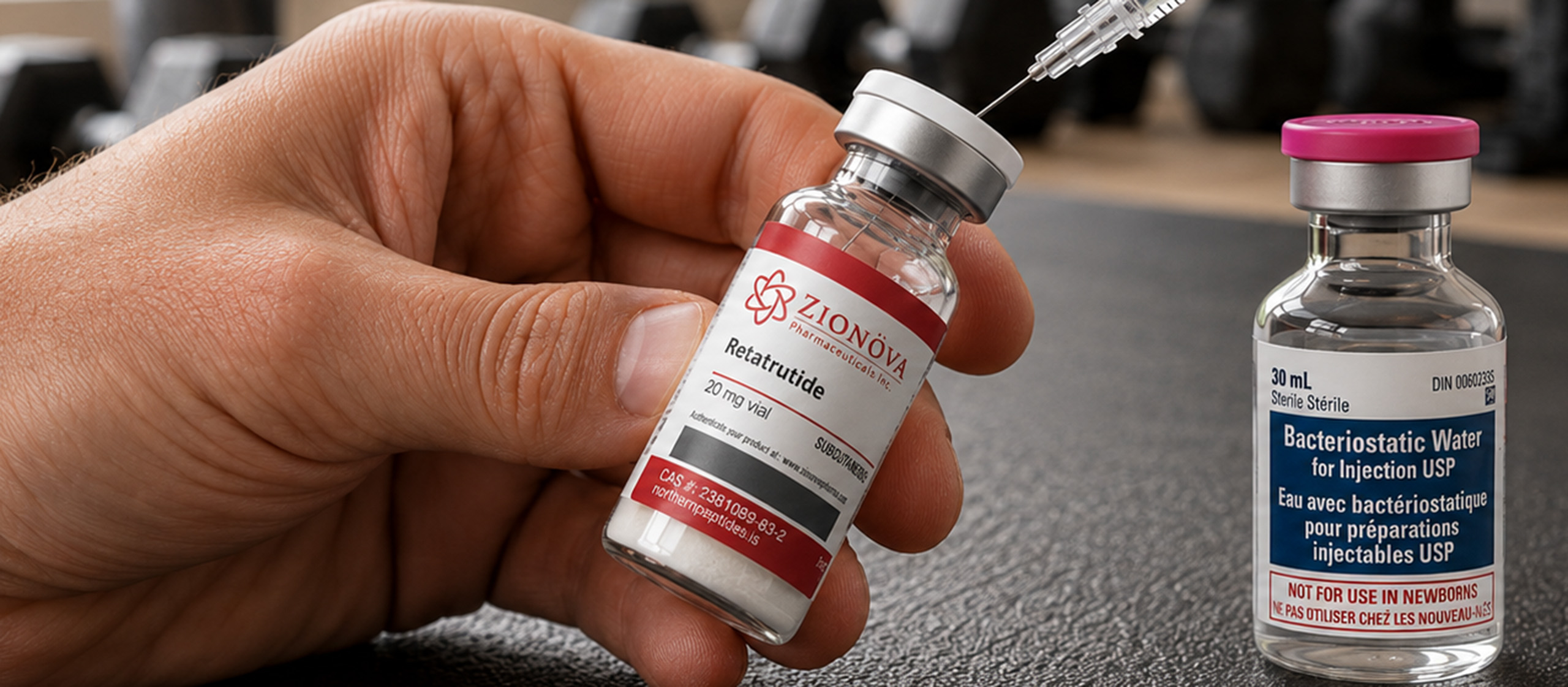
- Wash your hands thoroughly and work on a clean, hard surface. Sterile technique matters at every stage of this process.
- Wipe the septum of both the bacteriostatic water vial and the peptide vial with a fresh alcohol prep pad. Allow each to air dry for a few seconds before proceeding — inserting a needle through a wet septum can introduce alcohol into your solution.
- Draw your calculated volume of bacteriostatic water into the insulin syringe slowly. Check for air bubbles and expel them before proceeding.
- Insert the needle into the peptide vial at an angle, directing the tip so that the bacteriostatic water runs down the inside wall of the vial rather than directly onto the powder. This is the most important technique point in the entire process. Blasting liquid directly onto lyophilised peptide can damage the compound’s structure. Slow, wall-directed addition preserves it.
- Do not shake the vial. Once all the liquid has been added, gently swirl or roll the vial between your palms until the powder has fully dissolved. For most peptides this takes only a few seconds. Some compounds take longer — allow time rather than agitating forcefully.
- Inspect the solution. A properly reconstituted peptide solution should be clear and free of particulate matter. Cloudiness can indicate incomplete dissolution, contamination, or degradation. If the solution does not clear after gentle swirling, do not proceed.
- Label the vial with the compound name, concentration, date of reconstitution, and solvent used. This is basic research hygiene and prevents errors if multiple compounds are being worked with simultaneously.
Storage After Reconstitution
Lyophilised peptide powders, when stored correctly in a freezer at around -20°C, can remain stable for extended periods — in some cases years, depending on the compound. Once reconstituted, the stability window shortens considerably. A reconstituted peptide solution stored in a refrigerator at 2°C to 8°C is generally considered usable for two to four weeks, though this varies by compound and should be verified against available stability data for the specific peptide you’re working with.
A few storage principles that apply across most research peptides:
- Keep reconstituted solutions refrigerated at all times when not in use
- Avoid repeated freeze-thaw cycles on reconstituted solutions, as this degrades the compound
- Store away from direct light — amber vials or opaque storage containers help if your refrigerator has an interior light
- Never store reconstituted peptides in a syringe long-term — transfer back to the vial with the stopper intact
For unreconstituted lyophilised powder, freezer storage at -20°C is the standard. The compounds available through Northern Peptides’ Recovery, Muscle Growth, Anti-Aging, and Fat Loss categories all ship as lyophilised powder and should be stored accordingly until reconstitution.
A Note on Accuracy
The difference between 1.8ml and 2.0ml of bacteriostatic water sounds minor. At research scale it isn’t. Small volumetric errors at the reconstitution stage produce concentration errors that carry through every subsequent measurement in a study. Using a calibrated insulin syringe rather than an approximation, and using the Peptide Mixing Calculator rather than mental arithmetic, removes the two most common sources of error at this stage.
Reconstitution is not complicated, but it rewards precision. The steps above take a few minutes to complete correctly. The downstream consequences of doing them carelessly can invalidate hours of subsequent work.
All products available through Northern Peptides are sold strictly for research purposes only. Nothing in this article constitutes medical advice, and no compound referenced here is approved by Health Canada for human therapeutic use. Researchers are responsible for ensuring their use of any compound complies with applicable laws and institutional guidelines.