

Research Practices

How Research Peptides Are Made
Solid phase synthesis, why longer chains get harder, and why the milligrams on the label are not quite the milligrams...
Bac Water vs. Sterile Water
They sit next to each other, look identical and cost the same. The difference is one ingredient, and it matters...
CJC-1295 and Ipamorelin: What the Growth Hormone Research Shows
CJC-1295 and Ipamorelin act on separate growth hormone pathways that converge at the pituitary, and research combining them reports a...
PT-141 (Bremelanotide): Mechanism and Research Overview
Unlike most sexual-health research peptides, PT-141 acts on central nervous system melanocortin receptors rather than vascular pathways. Here's how that...
GHK-Cu Explained: The Copper Peptide Behind Skin and Tissue Research
GHK-Cu shows up in more blended stacks than almost any other peptide, but rarely gets explained on its own. Here's...

Epitalon and Telomere Research: What the Evidence Actually Shows
Epitalon has one of the longest research histories of any longevity peptide, built mostly on cell-line and animal telomerase data....

How to Read a Peptide Certificate of Analysis (COA)
A practical guide to reading a peptide Certificate of Analysis. What HPLC purity, identity confirmation, water content, and endotoxin testing...
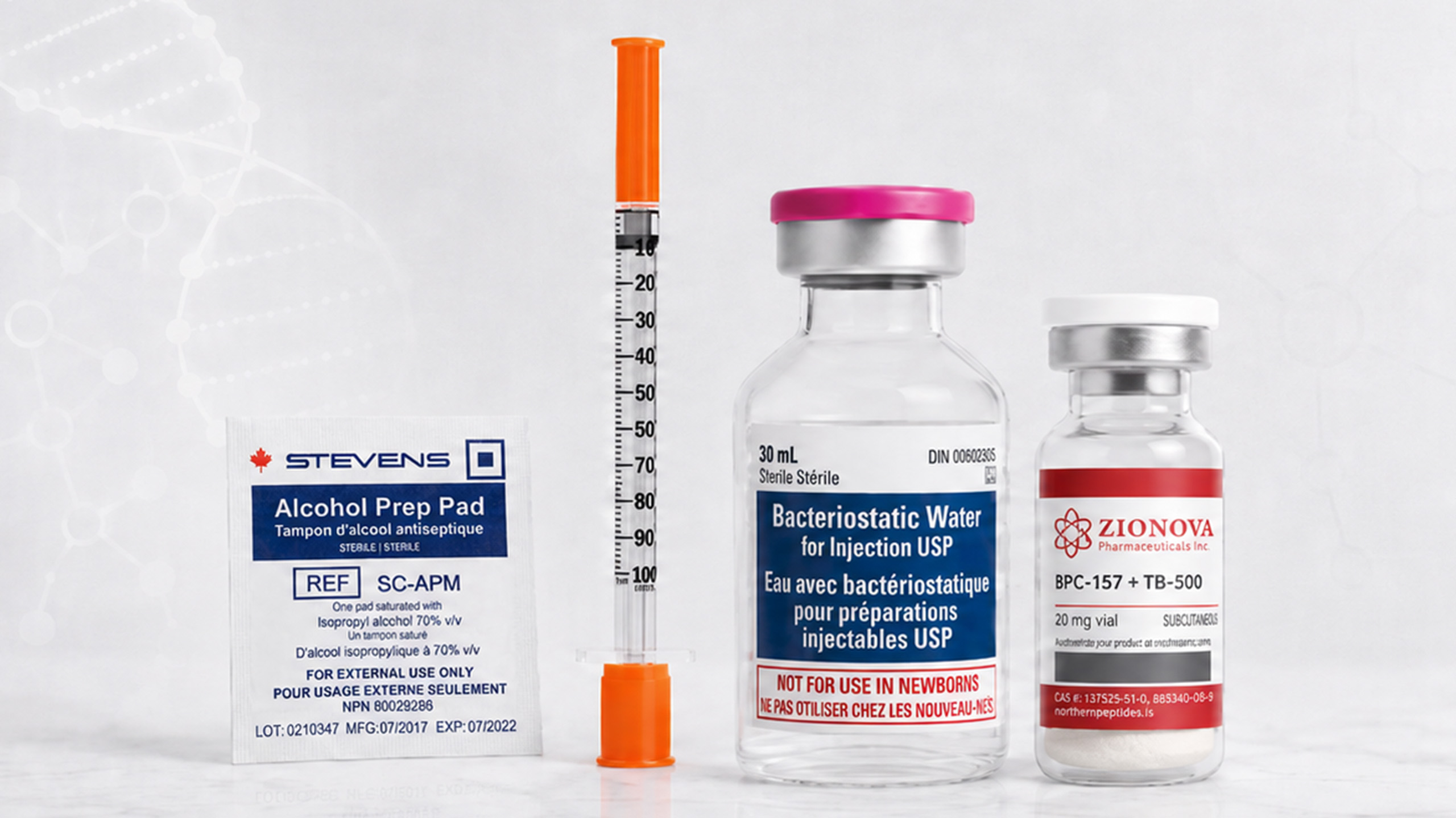
How to Properly Reconstitute and Store Peptides 101
Step-by-step guide to correctly reconstituting and storing research peptides. From solvent choice through to technique, calculation, and long-term storage best...