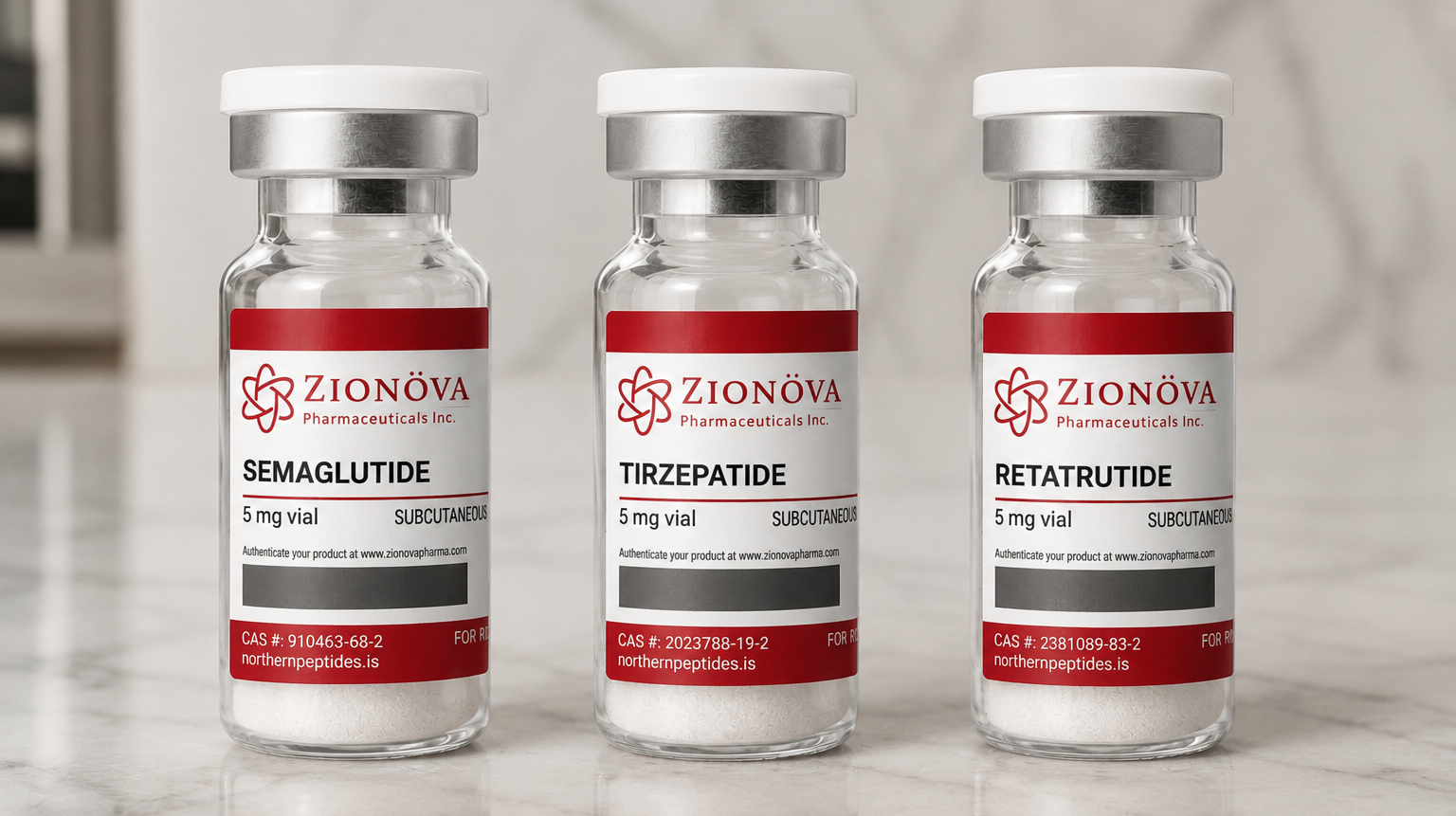

Peptide Regulations in Canada: What’s Actually Changing in 2026
If you’ve been following the peptide space closely, you’ll have noticed that 2026 has brought more regulatory noise than any year in recent memory. In February, US Health Secretary Robert F. Kennedy Jr. made an announcement that sent ripples through research communities on both sides of the border, signalling that more than a dozen previously restricted peptides were expected to return to legal compounding status in the United States. For Canadian researchers, the news raises an obvious question: what does any of this actually mean for us?
The short answer is that the regulatory landscape in Canada has always operated differently from the US, but the global momentum behind peptide research is undeniably shifting, and understanding the current framework helps you make informed, responsible decisions about what you’re sourcing and why.
How Canada Regulates Research Peptides
In Canada, peptides occupy a nuanced regulatory position under Health Canada’s Food and Drugs Act. Most research peptides, including compounds like BPC-157, TB-500, and GHK-Cu, are not approved as drugs for human therapeutic use, but they are not outright prohibited from being sold for research purposes either. The distinction matters enormously.
Health Canada’s primary concern is with how a product is marketed and represented. A peptide sold with explicit therapeutic claims crosses into drug territory and triggers the full weight of pharmaceutical regulation. A peptide sold for legitimate research use, without therapeutic claims attached, sits in a different category. This is the framework that governs the Canadian peptide market, and it’s why responsible sourcing and transparent labelling are foundational to operating within it correctly.
It’s worth noting that Canada does not have an equivalent to the US FDA’s compounding pharmacy category system, the Category 1 and Category 2 framework that drove the 2026 American reclassification news. What Canada has instead is a principle-based regulatory approach, where the intent, claims, and quality of a product determine its compliance status far more than a list designation does.
What the US Reclassification Signals for the Broader Market
Even though the FDA’s actions don’t have direct legal jurisdiction in Canada, they matter for three concrete reasons:
- They reflect a broader shift in how regulators are approaching the evidence base for research peptides. The compounds expected to regain compounding access in the US, including BPC-157, Ipamorelin, CJC-1295, TB-500, GHK-Cu, KPV, Selank, Semax, AOD-9604, and MOTS-C, are the same compounds that Canadian researchers have been actively working with for years. Their continued presence in serious international research contexts reinforces their legitimacy as subjects of scientific inquiry.
- They put pressure on quality standards across the entire North American supply chain. When regulatory attention increases, the spotlight falls harder on purity, documentation, and sourcing transparency. Vendors who can demonstrate rigorous third-party testing and traceable supply chains become more valuable in an environment like this. For Canadian researchers, this is a reason to be more selective about where you source, not less.
- They signal growing mainstream acceptance of peptide research as a credible scientific field. The compounds being discussed at the highest levels of US health policy are the same ones that researchers have been quietly but seriously studying for decades. That conversation moving into public policy territory is meaningful, and it won’t reverse.
The Compounds Most Affected by the 2026 Discussion
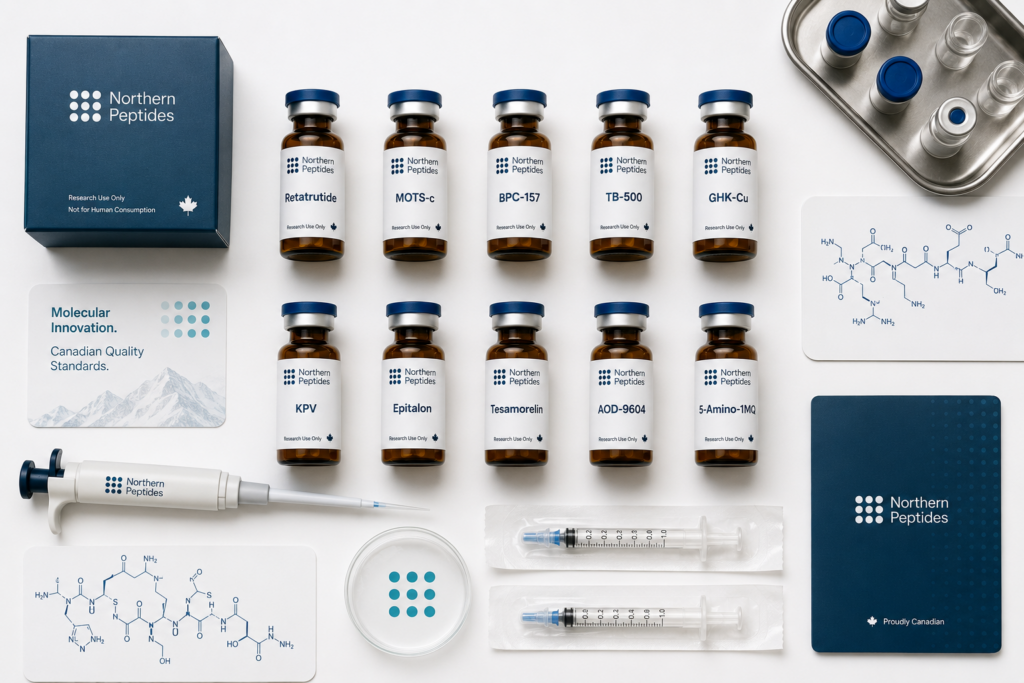
While the full formal list from the FDA had not been published at the time of writing, the compounds most frequently cited in connection with the reclassification are ones researchers will recognise immediately.
BPC-157, arguably the most studied synthetic peptide in recovery research, has been at the centre of the discussion. Derived from a sequence found in human gastric juice protein, it has an extensive body of preclinical data covering tissue repair, angiogenesis, and gastrointestinal integrity. The BPC-157 + TB-500 blend, often referred to as the Wolverine Stack, became one of the most searched peptide combinations globally in the past 18 months, and that interest hasn’t cooled.
TB-500 is frequently studied alongside BPC-157 for its complementary mechanisms. Where BPC-157 targets localised angiogenesis, TB-500 works through systemic actin-mediated cell migration. Together they represent two different but reinforcing repair pathways, which is why the combination has attracted sustained research interest.
GHK-Cu, the copper peptide with one of the broadest documented gene expression footprints of any compound in this category, was also on the US restriction list. Its applications in wound healing, skin regeneration, and anti-aging research have made it one of the more versatile peptides in current study. Northern Peptides also carries GHK-Cu in a 100mg format for researchers working at greater scale.
KPV, the anti-inflammatory tripeptide derived from alpha-MSH, rounds out what’s sometimes called the KLOW stack, a combination studied for skin-focused regenerative protocols. The full KLOW blend is available for researchers interested in studying that combination directly.
Why Purity and Sourcing Matter More Now, Not Less
One of the practical consequences of heightened regulatory attention is that it separates credible suppliers from those operating carelessly. Independent testing data from peptide analytics companies has shown that purity varies dramatically across vendors. In some cases, vials labelled as a specific compound contained none of the stated ingredient at all. In others, contamination with endotoxins, bacterial fragments capable of causing serious physiological reactions, was detected across a meaningful percentage of samples tested.
This is not a fringe concern. It’s the core argument for why sourcing from a verified, Canadian-based supplier with documented third-party testing matters for the integrity of any research programme. Every product available through Northern Peptides is independently tested for purity and potency before stock is made available. That’s not a marketing position, it’s the minimum standard that serious research requires.
The Peptide Mixing Calculator on site is also a practical resource for researchers establishing accurate working concentrations, which ties directly into the precision that quality research demands.
What Canadian Researchers Should Actually Do With This Information
Stay informed, but don’t overreact to US regulatory headlines. The framework governing research in Canada is Health Canada’s, and it has been relatively stable. The more relevant question for Canadian researchers right now is not whether a US policy change affects legal access. It’s whether your sourcing practices, documentation, and research framing are consistent with responsible, compliant use.
That means purchasing from suppliers who provide Certificates of Analysis, understanding what those documents actually tell you about the product you’re working with, and staying clear of any vendor whose marketing crosses into therapeutic claim territory, because that’s where the regulatory risk genuinely lives.
The peptide research space is maturing. The 2026 developments in the US are part of that maturation, not a disruption to it. For Canadian researchers who have been operating with rigour and responsibility, that’s largely good news.
All products available through Northern Peptides are sold strictly for research purposes only. Nothing in this article constitutes medical advice, and no compound referenced here is approved by Health Canada for human therapeutic use. Researchers are responsible for ensuring their use of any compound complies with applicable laws and institutional guidelines.