
Semaglutide, Tirzepatide, Retatrutide: What’s the Difference?
The language around metabolic peptide research has changed quickly. A few years ago, Semaglutide was the compound everyone was paying attention to. Then Tirzepatide arrived and expanded the receptor conversation. Now Retatrutide is adding a third layer to an already complex picture. For researchers trying to understand where each compound sits mechanistically, and why those differences matter, the distinctions between these three generations of incretin-based peptides are worth examining carefully.
This isn’t a comparison of outcomes or a ranking of effectiveness. It’s a breakdown of how each compound works at the receptor level, what that means for the research questions each one is suited to, and why the field has moved in the direction it has.
The Incretin System: A Brief Foundation
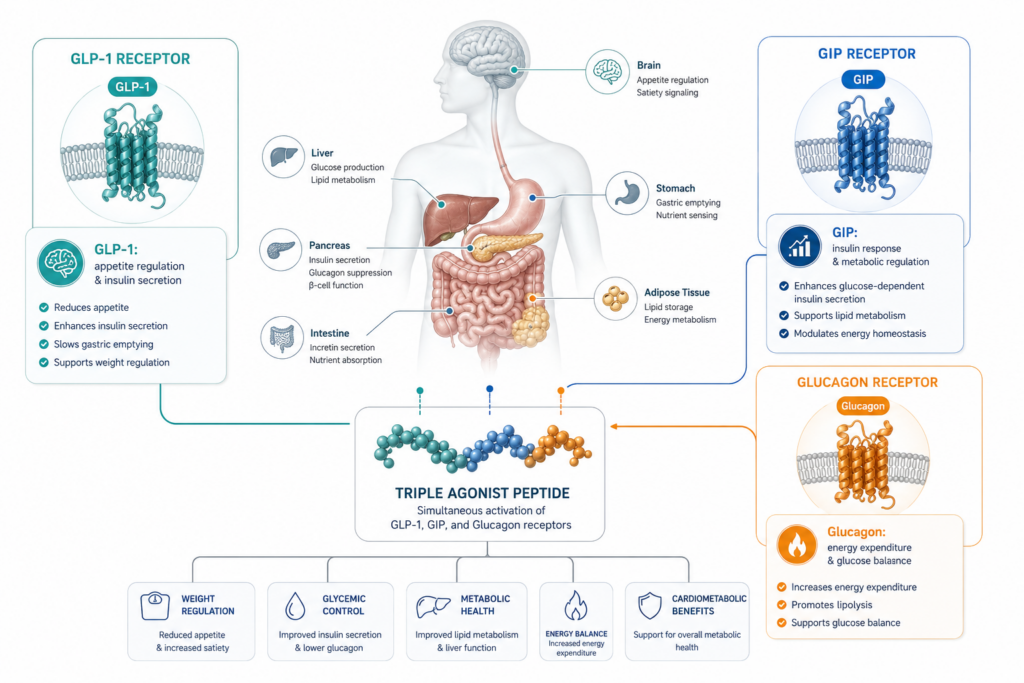
To understand what separates these three compounds, it helps to understand the system they all operate within. Incretin hormones are released by the gut in response to food intake and play a central role in regulating insulin secretion, appetite signalling, gastric emptying, and energy metabolism. The two primary incretins are GLP-1 (glucagon-like peptide-1) and GIP (glucose-dependent insulinotropic polypeptide). Glucagon, while not an incretin itself, is closely related and increasingly relevant to this conversation.
Each generation of metabolic peptide research has expanded the number of receptor targets engaged, and with that expansion has come a progressively broader influence on metabolic signalling. That progression is the story of how Semaglutide became Tirzepatide became Retatrutide.
Semaglutide: The GLP-1 Receptor Agonist
Semaglutide is a GLP-1 receptor agonist, meaning it binds selectively to the GLP-1 receptor and mimics the action of endogenous GLP-1. It was developed as a long-acting analogue with a half-life engineered for once-weekly dosing, achieved through fatty acid side chain modification that allows it to bind to albumin in the bloodstream and resist enzymatic degradation.
At the receptor level, Semaglutide’s mechanism of action involves suppression of glucagon secretion, enhancement of glucose-dependent insulin release, slowing of gastric emptying, and central nervous system appetite signalling through GLP-1 receptors in the hypothalamus and brainstem. The CNS component is significant — the appetite-reducing effects observed in research are not purely peripheral.
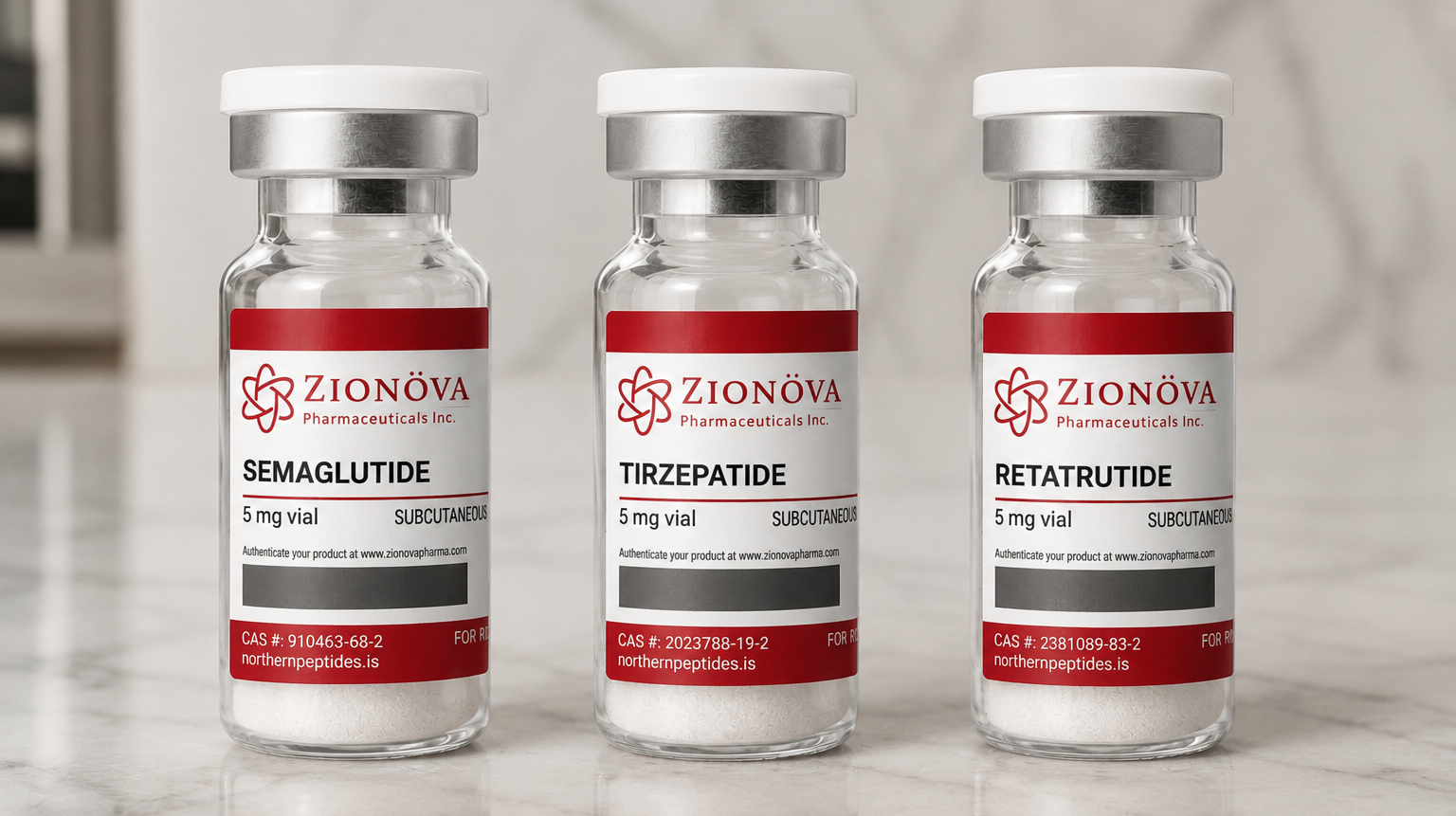
Semaglutide represented a meaningful advance over earlier GLP-1 agonists primarily in terms of duration and potency of receptor engagement. As a single-receptor compound it is the most mechanistically straightforward of the three, which also makes it the most thoroughly characterised in the research literature. Northern Peptides carries OZ10 Semaglutide for researchers working within this area, as well as an oral Semaglutide format for studies examining non-injectable delivery.
Tirzepatide: Dual GLP-1 and GIP Receptor Agonism
Tirzepatide introduced a second receptor into the equation. As a dual GLP-1 and GIP receptor agonist, it engages both incretin pathways simultaneously through a single molecule engineered to have meaningful affinity at both targets. This is not simply additive — the interaction between GLP-1 and GIP receptor signalling produces effects that differ qualitatively from either pathway activated alone.
The GIP receptor component is particularly interesting from a research perspective. GIP receptors are expressed in adipose tissue, and GIP signalling has been studied for its role in lipid metabolism and fat storage regulation. When GIP receptor agonism is combined with GLP-1 receptor agonism, the downstream metabolic effects appear broader than either pathway produces independently, particularly in the context of energy expenditure and body composition research.
Tirzepatide also demonstrates a different receptor binding profile to Semaglutide at the GLP-1 receptor itself, described as biased agonism, which means it activates certain downstream signalling pathways preferentially over others. This is an active area of research interest because biased agonism may influence both the efficacy and tolerability profile of a compound in ways that straight receptor occupancy data doesn’t fully predict.
Tirzepatide is available through Northern Peptides for researchers studying dual incretin receptor mechanisms, and sits alongside Semaglutide in the Fat Loss peptides category.
Retatrutide: Triple Receptor Agonism
Retatrutide is the most mechanistically complex of the three. It is a triple agonist, engaging GLP-1, GIP, and glucagon receptors simultaneously. The addition of glucagon receptor agonism is what distinguishes it most sharply from Tirzepatide, and it’s worth understanding what that adds to the picture.
Glucagon is conventionally understood as a counter-regulatory hormone to insulin, and its inclusion in a metabolic research compound might seem counterintuitive at first. But glucagon receptor agonism at appropriate levels has been shown in preclinical research to increase energy expenditure, promote hepatic fat oxidation, and influence thermogenesis. When combined with GLP-1 and GIP receptor activity, the glucagon component potentially contributes a distinct metabolic lever that the dual agonist compounds don’t access.
The research implications are significant. Retatrutide is not simply Tirzepatide with an added receptor. The three-way receptor interaction creates a more complex pharmacodynamic profile that is still being characterised. Phase 2 clinical trial data published in 2023 showed substantial reductions in body weight at higher doses, with effects appearing to exceed what had been observed with dual agonists at comparable timepoints, though direct head-to-head comparative trial data remains limited.
Northern Peptides carries Retatrutide in a 10mg format, a 15mg format, and a 20mg format for researchers working across different concentration requirements.
How the Three Compounds Compare at a Glance
The progression from Semaglutide to Tirzepatide to Retatrutide follows a clear trajectory: each generation engages more receptor targets, broadens the metabolic signalling footprint, and introduces greater pharmacodynamic complexity. Here’s how that maps out simply:
- Semaglutide: GLP-1 receptor agonist. Single target. Most extensively studied. Appetite suppression and insulin regulation are the primary research areas.
- Tirzepatide: GLP-1 and GIP dual agonist. Broader metabolic influence, with GIP receptor activity adding an adipose tissue and lipid metabolism dimension. Biased GLP-1 agonism adds additional nuance.
- Retatrutide: GLP-1, GIP, and glucagon triple agonist. The most complex receptor profile of the three. Glucagon receptor engagement adds an energy expenditure and thermogenic dimension not present in the earlier compounds.
What This Means for Research Design
The choice between these three compounds for research purposes depends largely on the question being asked. Semaglutide remains the best-characterised option and offers the most extensive comparative literature to work against. Tirzepatide is appropriate for research exploring dual incretin pathway interactions and the specific contribution of GIP receptor signalling. Retatrutide is the compound of interest for researchers specifically investigating triple receptor agonism, the role of glucagon receptor engagement in metabolic regulation, or the outer edge of what incretin-based signalling can do when multiple pathways are activated simultaneously.
All three are available through Northern Peptides, with the Metabolic Blueprint Stack also available for researchers interested in broader metabolic protocol design.
All products available through Northern Peptides are sold strictly for research purposes only. Nothing in this article constitutes medical advice, and no compound referenced here is approved by Health Canada for human therapeutic use. Researchers are responsible for ensuring their use of any compound complies with applicable laws and institutional guidelines.