
Retatrutide and Cardiovascular Health: What You Need to Know

Retatrutide has attracted significant attention as the most mechanistically advanced compound in the incretin peptide class. Most of that conversation has centred on its metabolic effects, particularly the substantial reductions in body weight observed in Phase 2 and Phase 3 clinical trial data. What receives considerably less coverage is the cardiovascular dimension of that research — and it’s a dimension worth examining carefully, because the cardiometabolic picture emerging from the trial data goes well beyond weight loss alone.
This piece covers what the current research shows about Retatrutide’s influence on cardiovascular and cardiometabolic markers, why the triple receptor mechanism is relevant to that conversation, and where the research currently stands for Canadian researchers studying this compound.
Why Metabolic Peptides and Cardiovascular Health Are Inseparable
To understand why Retatrutide’s cardiovascular profile is worth studying independently of its weight loss data, it helps to understand the relationship between metabolic dysfunction and cardiovascular risk. Obesity, insulin resistance, elevated triglycerides, hypertension, and dyslipidaemia don’t exist in isolation — they form an interconnected cluster of conditions, often described as metabolic syndrome, that collectively represent one of the primary drivers of cardiovascular disease globally.
Compounds that meaningfully address metabolic dysfunction therefore have the potential to produce cardiovascular effects that are mechanistically distinct from simply reducing body weight. The GLP-1 class of peptides has demonstrated this clearly. Semaglutide’s cardiovascular outcomes trial data showed reductions in major adverse cardiovascular events that exceeded what could be explained by weight loss alone, suggesting direct cardioprotective receptor-mediated mechanisms. Retatrutide, by adding GIP and glucagon receptor agonism to the GLP-1 foundation, expands that picture further.
The Cardiometabolic Markers in the Trial Data
 The Phase 2 TRIUMPH trial data published in 2023 provided the first substantive look at Retatrutide’s cardiometabolic effects alongside its weight loss outcomes. The findings across several cardiovascular risk markers were notable.
Blood pressure reductions were observed across all dosing groups, with the higher dose cohorts showing the most pronounced effects. Systolic blood pressure reductions of a clinically meaningful magnitude were recorded, an outcome consistent with what has been observed in the broader GLP-1 class but appearing more substantial in Retatrutide’s data, potentially reflecting the additional contribution of glucagon receptor activity to vascular tone regulation.
Triglyceride levels showed significant reductions across trial participants. Elevated triglycerides are one of the most consistent markers of metabolic syndrome and a recognised independent cardiovascular risk factor. The degree of triglyceride reduction observed in the Retatrutide data was notable even when adjusted for the degree of weight loss, suggesting a mechanism beyond simple fat mass reduction.
LDL cholesterol reductions were also observed, though the magnitude was more variable across dosing groups. The lipid profile improvements as a whole — lower triglycerides, modest LDL reduction, and in some participants improved HDL ratios — represent a meaningful shift in the cardiovascular risk marker picture.
Fasting insulin and glucose improvements were consistent with the compound’s incretin mechanism. Improved glycaemic control reduces the chronic vascular damage associated with sustained hyperglycaemia, representing another pathway through which Retatrutide’s cardiovascular relevance extends beyond weight alone.
The Glucagon Receptor’s Role in the Cardiovascular Picture
One of the aspects of Retatrutide’s mechanism that makes it particularly interesting from a cardiovascular research perspective is the glucagon receptor component. Glucagon receptor agonism has historically been viewed with caution in a cardiometabolic context — elevated glucagon is associated with hyperglycaemia and was not an obvious candidate for inclusion in a metabolic compound.
What the research has shown is that when glucagon receptor agonism is combined with GLP-1 and GIP activity, the net effect on glucose regulation remains favourable, while the glucagon component appears to contribute meaningfully to energy expenditure and hepatic fat oxidation. Reduced hepatic fat accumulation is directly relevant to cardiovascular health — non-alcoholic fatty liver disease is increasingly recognised as an independent cardiovascular risk factor, and compounds that reduce liver fat content are attracting serious attention in cardiometabolic research for precisely this reason.
The precise contribution of glucagon receptor agonism to Retatrutide’s cardiovascular marker improvements is still being characterised in the Phase 3 data. It represents one of the more genuinely open and interesting research questions the ongoing trials will address.
Phase 3 Data and What It Will Tell Us
The Phase 2 data established a compelling cardiometabolic signal. Phase 3 trials, which are larger, longer, and include dedicated cardiovascular outcomes endpoints, will provide the definitive picture. The TRIUMPH programme’s Phase 3 trials are specifically examining major adverse cardiovascular events as a primary endpoint, following the regulatory precedent established by Semaglutide’s SUSTAIN-6 and SELECT trials.
Results from Phase 3 are expected through late 2026 and into 2027. For researchers currently studying Retatrutide, Phase 2 provides a well-characterised mechanistic and preliminary outcomes foundation. Phase 3 will determine whether the cardiometabolic signal seen in the earlier data translates to meaningful reductions in hard cardiovascular endpoints at population scale.
A Note on Research Context
It’s worth being direct about where the evidence currently sits. The cardiometabolic data for Retatrutide is promising and mechanistically well-grounded, but it is still a compound in active clinical development. Phase 2 trial populations are smaller than Phase 3, and the full safety and efficacy profile across longer timeframes and broader patient populations is still being established.
For researchers working with Retatrutide, this is the current state of the literature: a strong Phase 2 cardiometabolic signal, a plausible and well-characterised mechanism, and Phase 3 outcomes data that will substantially clarify the picture in the period ahead. Studying a compound at this stage of development is precisely what research is for — the questions are genuinely open, and the data being generated now will shape how this class of compounds is understood for years to come.
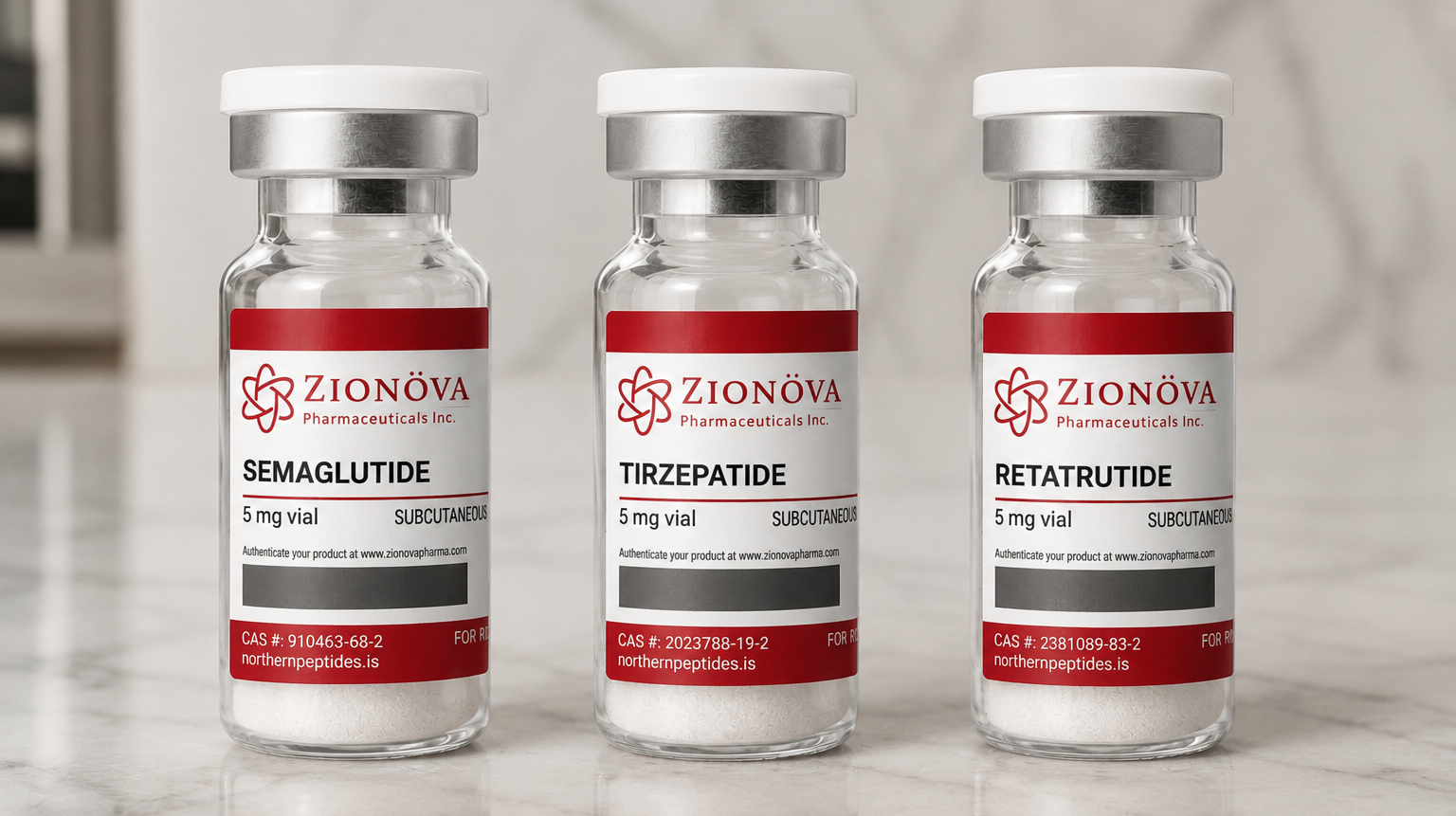
Northern Peptides carries Retatrutide in 10mg, 15mg, and 20mg formats for researchers working across different concentration requirements, alongside Tirzepatide and OZ10 Semaglutide for researchers studying the broader incretin class comparatively. All three sit within the Fat Loss peptides category.
All products available through Northern Peptides are sold strictly for research purposes only. Nothing in this article constitutes medical advice, and no compound referenced here is approved by Health Canada for human therapeutic use. Researchers are responsible for ensuring their use of any compound complies with applicable laws and institutional guidelines.